
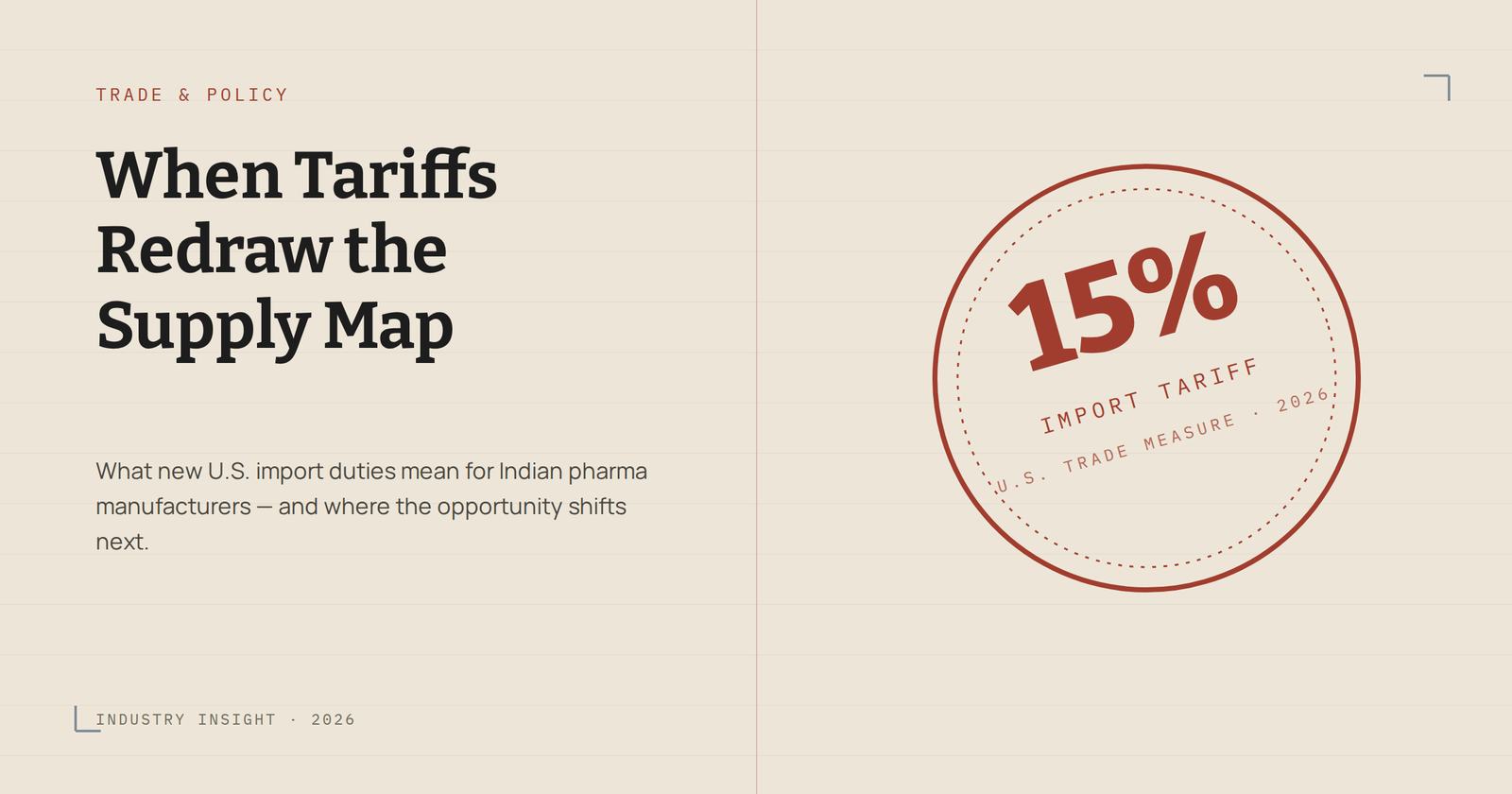
How US Tariffs on Pharma Imports Could Reshape Indian Manufacturing Demand
The global pharmaceutical industry is closely connected through complex supply chains, with India playing a major role in the production and supply of generic medicines, active pharmaceutical ingredients (APIs), formulations, and other healthcare products. As the United States considers and implements trade policies affecting pharmaceutical imports, the possibility of higher tariffs could create significant changes in global sourcing strategies. One potential outcome is a shift in Indian pharmaceutical manufacturing demand.
US Tariffs Could Change Global Pharma Sourcing
The United States depends on international supply chains for a substantial share of pharmaceutical products and ingredients. If tariffs increase the cost of importing medicines or pharmaceutical components from selected countries, pharmaceutical companies may begin reviewing their existing supplier networks.
Higher import costs can encourage companies to diversify their sourcing instead of relying heavily on a single country or manufacturing region. This could create opportunities for Indian pharmaceutical companies that offer competitive pricing, large-scale production capabilities, and experience in supplying regulated international markets.
India already has a strong position in the global generic drug industry, making it a potential alternative manufacturing destination for companies looking to reduce supply chain risks.
Increased Demand for Indian Contract Manufacturing
One of the biggest opportunities could emerge in the area of third-party and contract pharmaceutical manufacturing. US-based companies and international pharma brands may look for reliable manufacturing partners capable of producing medicines at competitive costs.
Indian manufacturers could see increased enquiries for:
- Generic pharmaceutical formulations
- Tablets and capsules
- Injectable products
- Softgel capsules
- Nutraceutical products
- APIs and pharmaceutical intermediates
- Contract and private-label manufacturing
Companies with modern manufacturing infrastructure, strong quality systems, regulatory compliance, and export experience may be better positioned to benefit from changing global sourcing patterns.
Supply Chain Diversification May Benefit India
Tariffs are not only about increasing costs; they can also encourage businesses to reduce dependency on concentrated supply chains. The COVID-19 pandemic and subsequent global disruptions already pushed pharmaceutical companies to focus more on supply chain resilience.
If US trade policies make certain import routes more expensive, pharmaceutical companies may explore a broader network of suppliers. India could become an increasingly important part of this diversification strategy.
The country’s established pharmaceutical ecosystem, availability of skilled professionals, and growing investment in manufacturing infrastructure could support this transition.
Quality and Regulatory Compliance Will Be Critical
However, increased demand will not automatically translate into business opportunities for every manufacturer. The US pharmaceutical market has strict regulatory requirements, and companies must meet high standards related to quality, documentation, manufacturing practices, and product approvals.
Indian manufacturers looking to expand their presence must focus on:
- US regulatory compliance
- Strong quality assurance systems
- Transparent documentation
- Reliable supply capabilities
- Consistent batch quality
- Advanced manufacturing technology
Manufacturers that can combine cost efficiency with international quality standards may have a stronger competitive advantage.
A New Opportunity for Indian Pharma Manufacturing
The introduction or expansion of US tariffs on pharmaceutical imports could reshape global procurement decisions. While tariffs may also increase costs and create uncertainty for the healthcare industry, they could encourage pharmaceutical companies to explore alternative sourcing and manufacturing partnerships.
For India, this could mean growing opportunities in pharmaceutical exports, contract manufacturing, API production, and generic drug development. The long-term impact will depend on the final structure of US tariff policies, product-specific exemptions, regulatory requirements, and how global pharmaceutical companies respond.
As supply chains continue to evolve, Indian manufacturers that invest in quality, capacity, compliance, and innovation could be well positioned to capture a larger share of international pharmaceutical manufacturing demand.